Dynamic interpretation of commercial vehicle policies
IntroductionThe change in this round of policies is not abou···

In the first half of 2026, the commercial vehicle market achieved an overall increase in sales volume, with a cumulative sales volume of 2.297 million vehicles from January to June, a year-on-year increase of 8.3%. The monthly sales volume in June continued to maintain double-digit growth. Behind the impressive data, the structural contradiction of "internal cooling and external heating" in the industry is becoming increasingly prominent, compounded by the interweaving of policy dividends and retreat signals, and the accelerated reconstruction of energy routes. The entire commercial vehicle track is standing at a critical node of switching between old and new modes.
From the perspective of demand, this round of industry growth is not driven by the comprehensive recovery of the domestic market. In the first half of the year, domestic commercial vehicle sales only saw a slight increase of 0.8%, in sharp contrast to the export market, where the export scale of 664000 vehicles increased by 32.5% year-on-year. The export contribution was close to the entire industry increment, accounting for nearly 30% of the total sales volume. Heavy trucks have become the main force of export growth, with 230000 heavy trucks exported in the first half of the year, a year-on-year increase of 43%. Southeast Asia, Latin America, Africa, and the Middle East continue to undertake domestic commercial vehicle production capacity. The logic of going global in the industry is also iterating, with a gradual shift towards local factory construction, localized services, and integrated financial solutions for pure vehicle exports. The export of second-hand commercial vehicles has become a new incremental track, and overseas orders for electric light trucks and new energy buses continue to rise. However, relying on overseas markets to support growth is uncertain, and trade barriers and regulatory differences in various regions will continue to test the global operational capabilities of the industry.

The root cause of the weak recovery in the domestic market lies in the fundamental pressure on the freight industry. The current road logistics freight rates continue to be weak, directly affecting the willingness of logistics enterprises and individual car owners to purchase cars. Market demand relies more on policy driven rather than spontaneous updates. 22 billion yuan of ultra long term special treasury bond supports the implementation of scrapping and updating policies for old trucks, becoming the most important catalyst for domestic demand in the year. For the first time, the policy includes both National III and National IV operating trucks in the subsidy scope, and specifies that priority should be given to replacing new energy trucks. Heavy trucks can enjoy a maximum subsidy of 190000 yuan when replacing new energy vehicle models. The limited total amount of funds and the first come, first served rule will accelerate the clearance of old transportation capacity and directly stimulate the demand for new energy heavy truck replacement. With the support of policies, the heavy truck market continued to recover in the first half of the year, with a cumulative sales volume of 661000 units, a year-on-year increase of 22.6%, and consecutive monthly sales exceeding 100000 units; The overall sales volume of new energy commercial vehicles was 548000 units, a year-on-year increase of 36%. Among them, the growth rate of new energy heavy-duty trucks exceeded 80%. Fixed short distance scenarios such as ports, mining areas, steel mills, and urban construction have become the main battlefield for electrification penetration, and the demand for electric vehicles in urban power distribution is steadily released.
Policy dividends are not sustainable in the long run, and industries in the medium to long term must face the challenges brought by the orderly withdrawal of supportive policies. According to relevant arrangements, starting from January 1, 2027, the policy of exempting pure electric, plug-in hybrid, and fuel cell commercial vehicles from vehicle and vessel tax will be cancelled, and the policy of halving the collection of energy-saving commercial vehicles will come to an end simultaneously. This means that new energy commercial vehicles will soon bid farewell to policy protection and fully enter the stage of market-oriented competition. At the same time, on July 1st, the new mandatory national standards for electric vehicle safety were officially implemented, raising the entry threshold for new energy commercial vehicles and forcing the industry chain to continue to increase efforts in battery safety and thermal runaway protection. The top-level planning has anchored the long-term direction. According to the Implementation Plan for Promoting the Large scale Application of New Energy Heavy Trucks, the target for the penetration rate of new energy heavy trucks by 2030 is to reach 40%, with a total of over 1.6 million vehicles. More than 3000 charging and swapping stations will be laid out in high-speed trunk lines, mining areas, and ports, and zero carbon freight channels will be built. The transformation to electrification is an irreversible long-term trend.
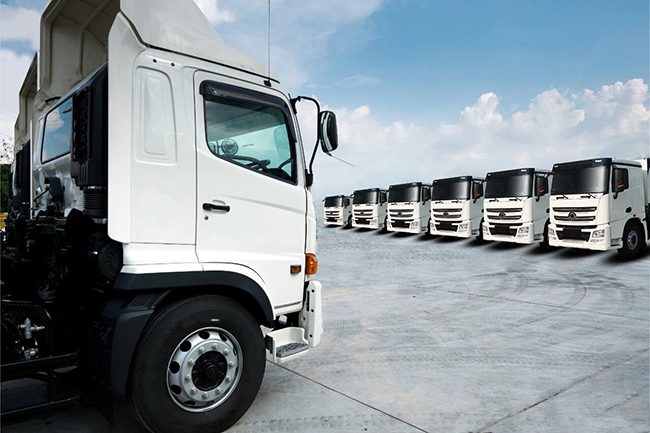
In the evolution of the market pattern, the differentiation trend of diversified driving routes is clearly evident. In the field of long-distance trunk transportation, LNG high-power tractor still maintains stable living space; In short distance scenarios such as ports, factories, and urban distribution, pure electric vehicles represented by battery swapping mode are rapidly penetrating; Hybrid and hydrogen fuel commercial vehicles are still in the demonstration and promotion stage, and there is still a long way to go before they can be commercialized on a large scale. The situation of multiple routes running in parallel means that it is difficult for the industry to have a single technology route that can be used interchangeably, and the ability to adapt to different scenarios will become the core competitiveness.
Looking ahead to the second half of the year, the subsidy for scrapping and updating old trucks is the most important short-term variable. Seizing the policy window to replace transportation capacity will support the demand for heavy trucks and new energy trucks to maintain prosperity. But the hidden concerns in the industry cannot be ignored: the sluggish domestic freight rates will continue to suppress the confidence of terminal car buyers; The withdrawal of tax and tax incentives related to new energy next year will increase the purchase cost of new energy vehicles; Changes in overseas geopolitics and trade policies have also cast uncertainty on export growth.
Overall, the current commercial vehicle industry is in a stage where short-term policy dividends coexist with long-term transformation pressures. Short term reliance on trade in to drive replacement, and relying on overseas markets to hedge domestic demand gaps; In the long run, the industry must break free from dependence on policy subsidies, continuously improve charging and swapping infrastructure, optimize the full lifecycle cost of new energy vehicles, and deeply cultivate localized overseas operations. Only by completing the transition from policy driven to market driven, and bridging the two main lines of electrification and globalization, can the industry truly emerge from cyclical fluctuations and achieve high-quality development.