Observation of the current situation of public transportation: passenger flow is differentiated, roles are reevaluated
In the early morning bus carriage, the prompt "please r···

1、 Policies and Subsidies: Updating Subsidies for Continuation, Reform Shifts to 'Hematopoietic'
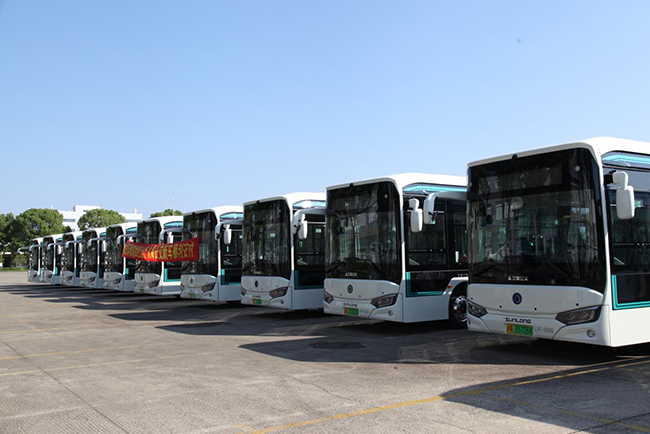
In May 2026, the Ministry of Transport and the National Development and Reform Commission issued the "Implementation Rules for Subsidies for the Renewal of New Energy City Buses and Power Batteries in 2026". The core is "two quotas": for old buses registered before December 31, 2018, they will be scrapped and replaced with pure electric, plug-in hybrid or hydrogen fuel cell buses, with an average subsidy of 80000 yuan per vehicle; A full replacement of power batteries that have exceeded the warranty period or do not meet the safety operation conditions will be subsidized at 42000 yuan per vehicle (the actual price will be subsidized based on the actual situation). The fund comes from super long term special treasury bond, which is earmarked for special purpose and isolated annually, and cannot be used to make up the gap in previous years; The deadline for application is December 31, 2026, and the deadline for material supplementation is January 15, 2027. In many places, the "first come, first served" policy will be implemented.
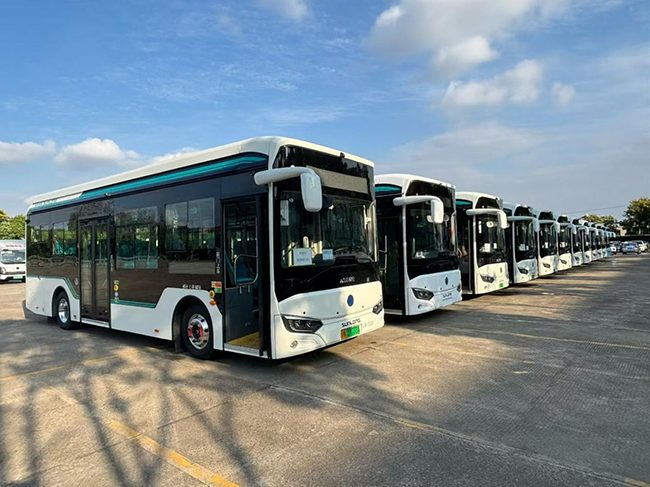
Local standards have been further strengthened: Jiangxi provides a subsidy of 100000 to 140000 yuan based on the length of the vehicle, and an additional 30000 yuan for low floor and low entry vehicle models; Shanxi adopts a "lottery first and subsidy later" policy, with batteries subsidized at 50% of the new purchase price, up to a maximum of 42000 yuan. Tightening of safety supervision: Battery replacement must be produced after January 1, 2025, with a warranty of no less than 5 years. Information must be submitted to the national traceability platform, and designated recycling and local protection are strictly prohibited.
More noteworthy is the "Guiding Opinions on Promoting Deepening Reform of Urban Public Transport Enterprises" jointly issued by four departments and approved by the State Council on September 23. It clearly adheres to the public welfare attribute, one city one policy, one enterprise one policy, and consolidates the main responsibility of the urban government; Strictly implement subsidy compensation, include policy losses caused by low ticket prices, discounted rides, and directive tasks in the assessment, and take measures to ensure line operation when revenue falls short of expectations; At the same time, we will promote dynamic adjustment of ticket prices, segmented pricing for long-distance routes, customized adjustment of bus market prices, and encourage the use of artificial intelligence for passenger flow prediction, network optimization, and intelligent scheduling to promote the integrated operation of public transportation and rail transit. In November, seven departments in Jiangxi Province proposed the policy of "using stations to support lines and businesses to supplement transportation", allowing idle and inefficient spaces in stations to provide socialized commercial services, and exploring the use of land for comprehensive development to benefit public transportation.
2、 Market fluctuations: Domestic bus sales fluctuate, exports continue to heat up
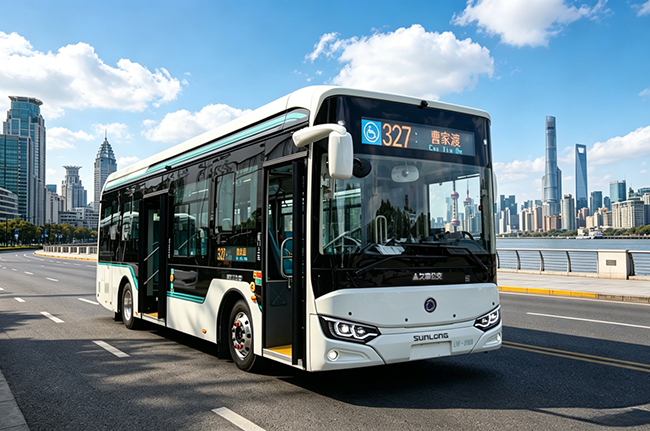
Under policy support, the market is not fully prosperous. Industry statistics show that in October 2026, 4373 new energy buses over 7 meters in length were sold in China, a year-on-year decrease of 26.31%. However, the cumulative year-on-year growth from January to October was still 5.39%, achieving a "nine consecutive increases", indicating that demand was ahead in the first half of the year and the update pace slowed down in the third quarter. At the same time, overseas has become the main battlefield for incremental growth: from January to October, the export of new energy buses was 17858, a year-on-year increase of 29.46%, and the monthly year-on-year increase in October reached 55.4%. BYD and Yutong have accumulated exports of 4479 and 3079 vehicles, respectively. Another background is that the urban passenger volume of public buses and trams will decrease by 5.5% year-on-year in 2025, while by the end of 2025, the proportion of new energy urban buses has reached 77.6%. The green chassis of the industry is basically laid out, and the growth logic is shifting.
3、 The subsidy logic has changed, and the industry needs to change its approach
Firstly, subsidies have shifted from "stimulating sales" to "regulating updates". The fixed subsidy is not linked to the car price, and combined with battery traceability, warranty period, and safety assessment, the policy no longer simply pursues scale, but binds safety, compliance, and full lifecycle management together. For car companies, the space for low price competition has narrowed, and technology, safety, and after-sales capabilities have become new thresholds.
Secondly, the policy focus is shifting from "blood transfusion" to "hematopoiesis". The reform proposal combines cost regulation, ticket price adjustment, station land use, and charging support. Jiangxi's "using stations to support lines" provides a market-oriented sample: public transportation cannot rely solely on financial support, but also on resource management, customized services, and digitalization to reduce costs. But ticket price adjustments must adhere to the bottom line of public welfare and avoid simply transferring costs to the elderly and low-income groups.
Thirdly, regional differentiation and redemption risks cannot be ignored. 'First come, first served' is beneficial for efficiency, but it may cause cities with tight finances and late declarations to miss out on quotas; The subsidy rate and timeliness are still pain points for some enterprises. It is advisable to establish a cross year rolling declaration and pre allocation mechanism, and link subsidies with passenger flow, service quality, and safety performance.
Fourthly, behind the high growth of exports, it is necessary to prevent "internal competition and external spillover". Due to fluctuations in domestic bus sales and high export growth, enterprises should be more vigilant about exchanging low prices for market share, and consider localized services, compliance capabilities, and branding as long-term barriers.
Overall, the public transportation market is shifting from a single point breakthrough of "vehicle electrification" to a systematic restructuring of "vehicle updates+operational mechanisms+resource development". Whoever can transform the subsidy dividends into a low-cost and efficient operational system will be able to take the lead in the next round of competition.