Observation of the current situation of public transportation: passenger flow is differentiated, roles are reevaluated
In the early morning bus carriage, the prompt "please r···

In the early morning bus carriage, the prompt "please ring the bell if you don't stop at a station" is replacing the traditional practice of "stopping at every station". Urban public transportation is still the same urban artery, but its operational logic has quietly been rewritten.
Basic passenger flow: The total volume is still large, but the share is shifting. According to data from the Ministry of Transport, the national urban passenger volume in the first half of 2026 will be 52.7 billion, a year-on-year increase of 2.0%; Among them, urban rail transit had 16.76 billion passengers, an increase of 3.9%, taxi services had 17.91 billion passengers, an increase of 5.5%, while public buses and trams had 17.99 billion passengers, a decrease of 2.8%. Public transportation remains one of the largest modes of urban passenger transport, but the increase has been taken away by rail and ride hailing services. By extending the timeline, the passenger volume of public buses and trams will reach 36.566 billion by 2025, a year-on-year decrease of 5.5%, which is about half of what it was in 2019. The passenger flow structure is also changing: the proportion of preferential groups such as the elderly and students is increasing, with some cities exceeding 40%, and ticket revenue is difficult to cover rigid costs.
On the cost side: The dividends of electrification have faded, and battery swapping and labor have become new pressures. New energy buses save fuel costs, but face battery expiration. Industry estimates show that from 2024 to 2028, over 250000 electric buses in China will be covered by insurance, and the cost of replacing a set of battery powered bicycles will be over 100000 yuan; At the same time, driver salaries, station electricity bills, and maintenance expenses remain hard expenses. Some small and medium-sized cities are under financial pressure and subsidies are unstable, forcing enterprises to compress non productive expenditures while seeking new income.
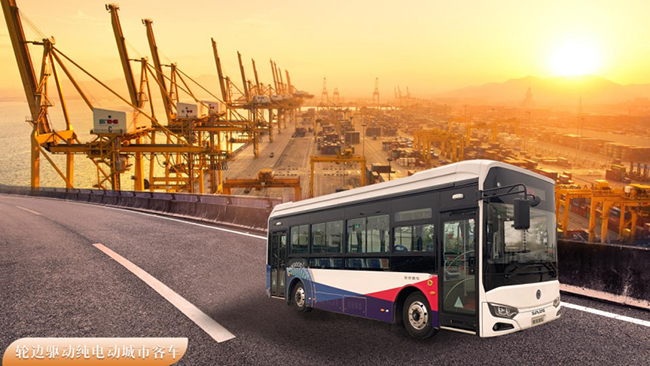
One line change: shifting from "what line I drive, what car you ride" to on-demand supply. Suzhou has implemented full responsive stops in most urban areas and Kunshan, covering over 671 routes and 4385 vehicles; Haikou's "Dynamic Micro Bus" generates routes based on reservations and invests 245 small cars; 152 6-meter level small buses will be deployed in Changsha to connect to the end of the subway; Chengdu visited 149 key industrial parks and operated over 150 park buses for 24 parks. Guangzhou Bus Group has opened a total of 865 customized buses, serving 230000 passengers per day; The "Subway Express" has 42 lines connecting 30 subway stations, with a daily passenger flow of 31000. These numbers indicate that demand has not disappeared, but has become more scattered and personalized.
Another line: synchronous restructuring of system and assets. The original private public transportation in Zhaoyang District, Zhaotong, Yunnan suffered a monthly loss of about 2 million yuan. The enterprise applied to withdraw and turn to nationalization and integration; Zhejiang Yuhuan is also promoting the restructuring of three private public transportation companies to solve the institutional contradiction of "unwilling to operate on obscure routes". At the same time, Shandong Zaozhuang has converted scrapped buses into coffee trucks and passenger stations into discount warehouses, saving millions of yuan in electricity bills for photovoltaic and energy storage stations in one year. The operating costs in the first nine months of this year decreased by 19.8 million yuan year-on-year, and the revenue from new business models exceeded 65 million yuan. More than 200 employees have been internally transferred. Whether this type of 'commercial transportation supplement' can be replicated depends on the endowment of urban resources, but the direction is clear: bus stops are no longer just parking lots, but viable assets.
Public transportation will not disappear, but we need to redefine ourselves. Firstly, the public welfare attribute cannot be shaken. Regardless of whether it is state-owned or private, the losses caused by low ticket prices, discounted rides, and directive tasks should have institutionalized cost regulations and subsidies to support them, and the costs cannot be passed on to passengers. Secondly, efficiency improvement relies on data and scenarios, rather than simply cutting lines. The value of responsive parking, micro circulation, and customized public transportation lies in investing transportation capacity into real demand; If we only understand "cost reduction" as reducing the number of trips, it will only push passenger flow further towards private cars. Thirdly, employee rights are the bottom line of transformation. The dedicated salary account, dynamic salary adjustment, and tilt towards the front line are not only requirements for people's livelihoods, but also guarantees service quality. Fourthly, for small and medium-sized cities, nationalization and marketization are not contradictory: using state-owned enterprises to ensure basic needs and using market-oriented businesses to supplement income, the key is to settle accounts and clarify rights and responsibilities.
In the final analysis, the current situation of public transportation is not simply a "decline", but a shift from scale coverage to precise service, from single fare to diversified operation. The wheels are still turning, but the logic driving them is different.